
MATERIALS
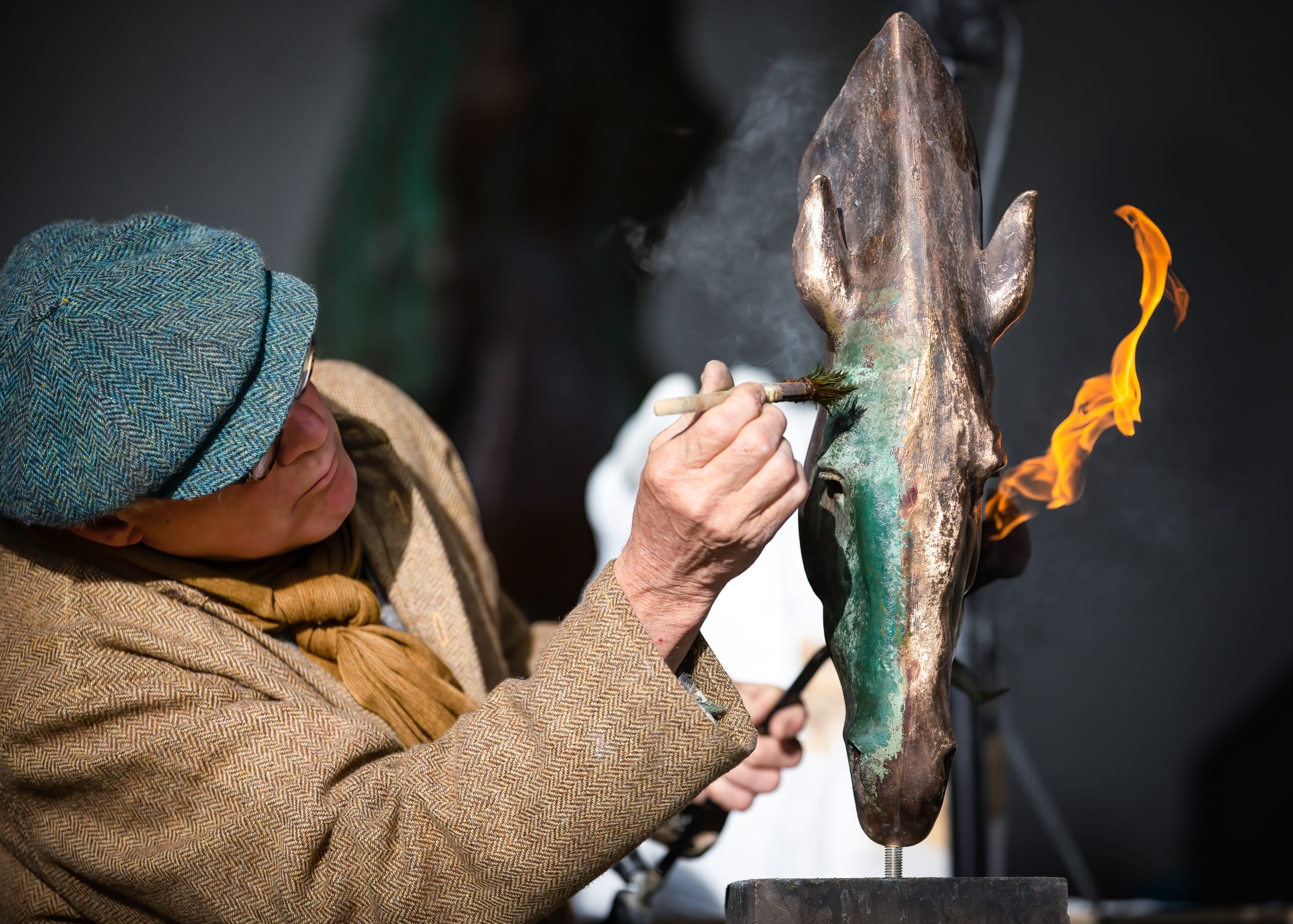
Bronze
Nic has worked in bronze throughout his career. Some of his most iconic work, such as ‘Still Water, 33ft’, placed in Marble Arch in 2010, are fine examples of his engagement with this age-old medium. Following his graduation from Wimbledon College of Arts in 1986, he enrolled on a bronze casting course at Central St Martin’s and over the next few years, whilst living in Stoke Newington, he proceeded to cast his sculpture in his backyard. This ‘hands-on’ approach encouraged Nic to be experimental in his early years with form and scale. Whilst he has not cast his work personally since this period, Nic thoroughly enjoys the patination process behind each sculpture, traditionally favouring strong verdigris overtones.
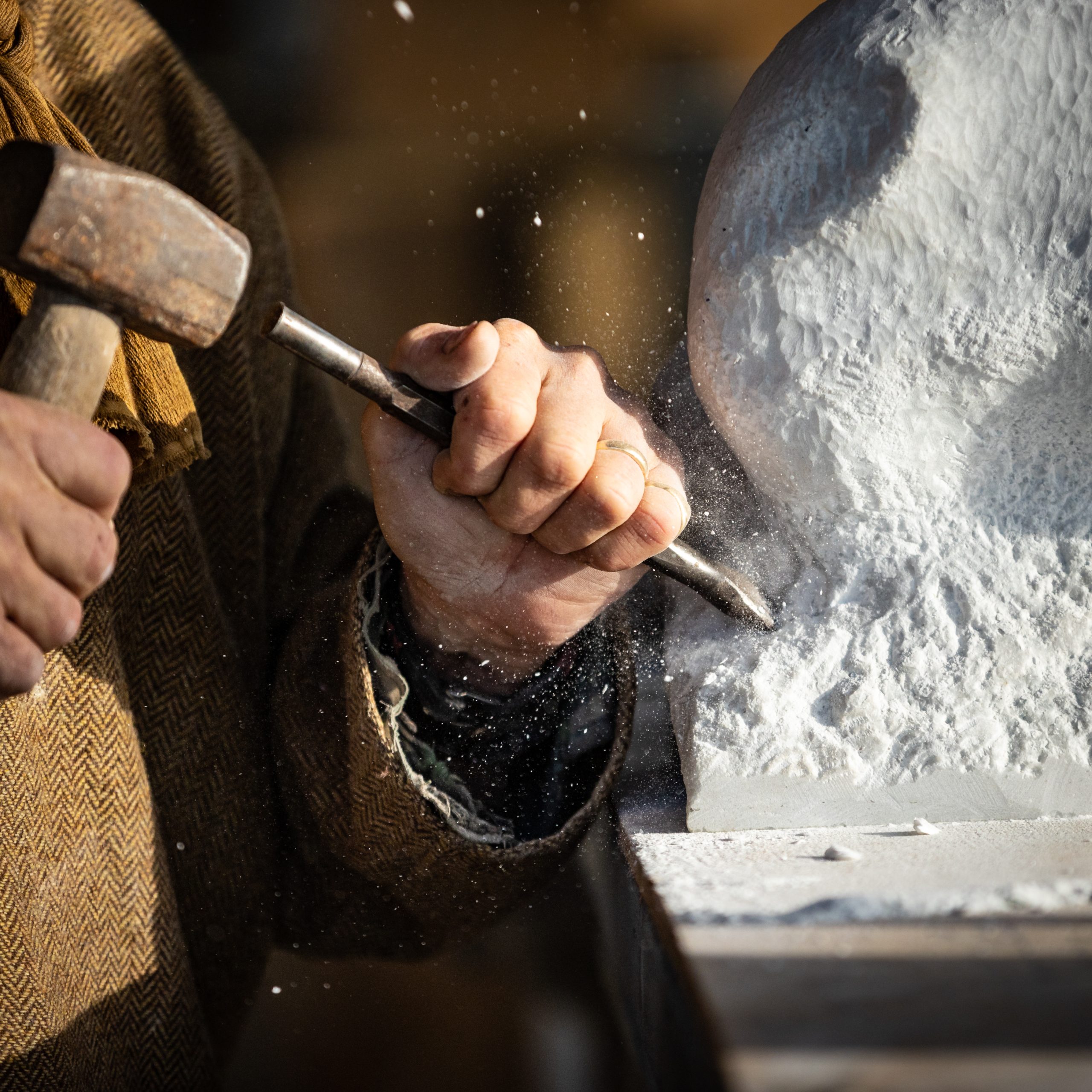
Semi-precious stone
Nic has carved throughout his career, however in 2020 he revisited the technique and began making a large range of work from semi-precious stones. To date, these have included jade, lapis lazuli, rose-quartz, chrysoprase, obsidian, turquoise, malachite, ruby and Carrara marble. The uniqueness and history associated with these materials has lent themselves naturally as suitable ‘canvasses’ for his expression. Notably, the purity of Carrara marble helps to capture the calm linearity of the ‘Drinking Head’ motif, yet the bold density of Lapis Lazuli acts to inform the strength of his ‘Greek Heads’. Nic has spoken of the cathartic sensation achieved during the carving process, a subtractive technique that contrasts to his conventional way of working. Carrara marble in particular has provided a canvas for some recent monumental sculpture. In 2022 he completed a 14ft carving from a single block of marble titled ‘How Still the Night’. Hand-carved by Nic in Pietrasanta (near the carrara quarries), the rough block weighed 35 tonnes.
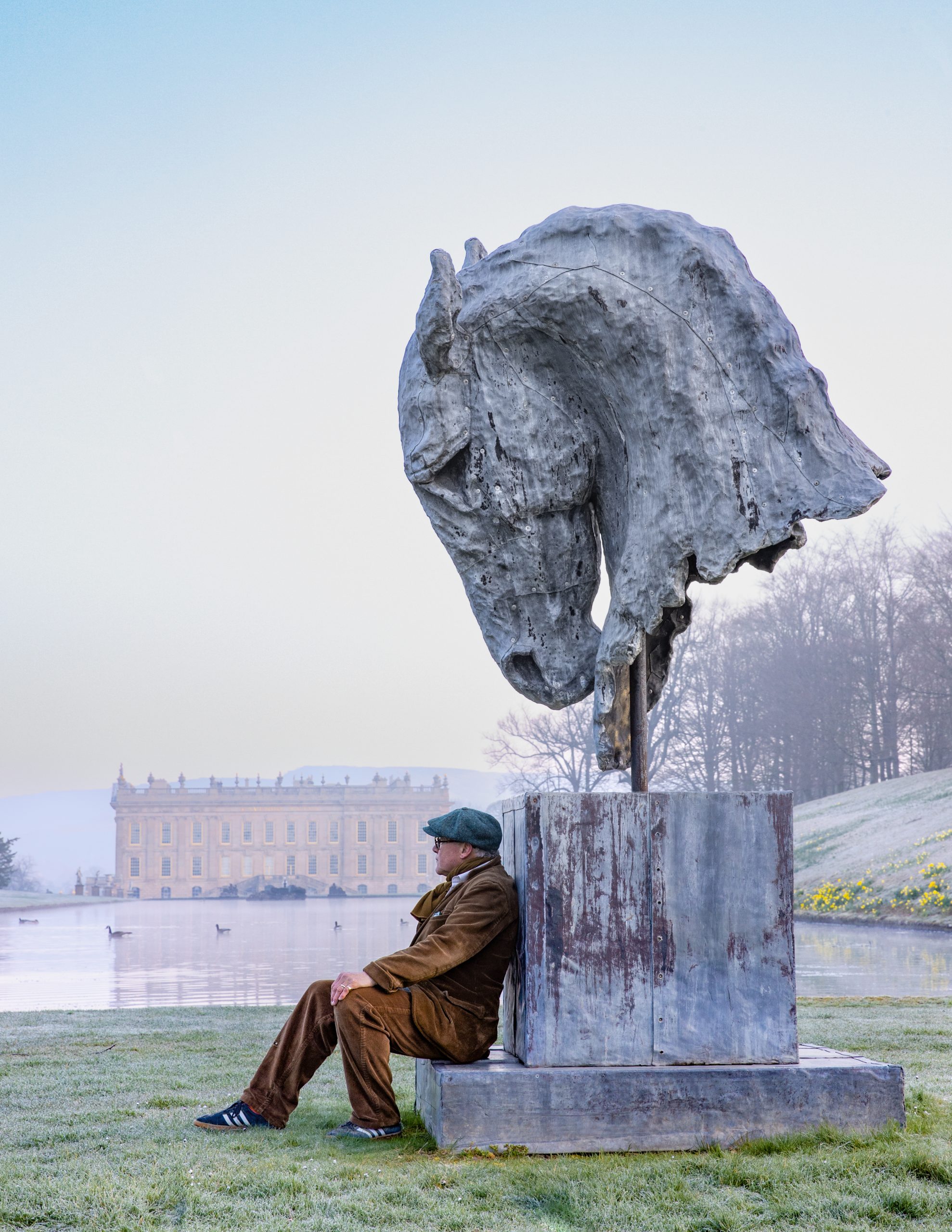
Lead
Lead sheet is one of the first materials that Nic began working with, even before bronze, whilst he was at art college in the early 1980s. To create his lead sculptures, he begins by modelling the form and then casting it in resin. Lead sheet is then hammered into shape around the resin, joined together through handmade rivets. This technique means no two lead sculptures are the same.
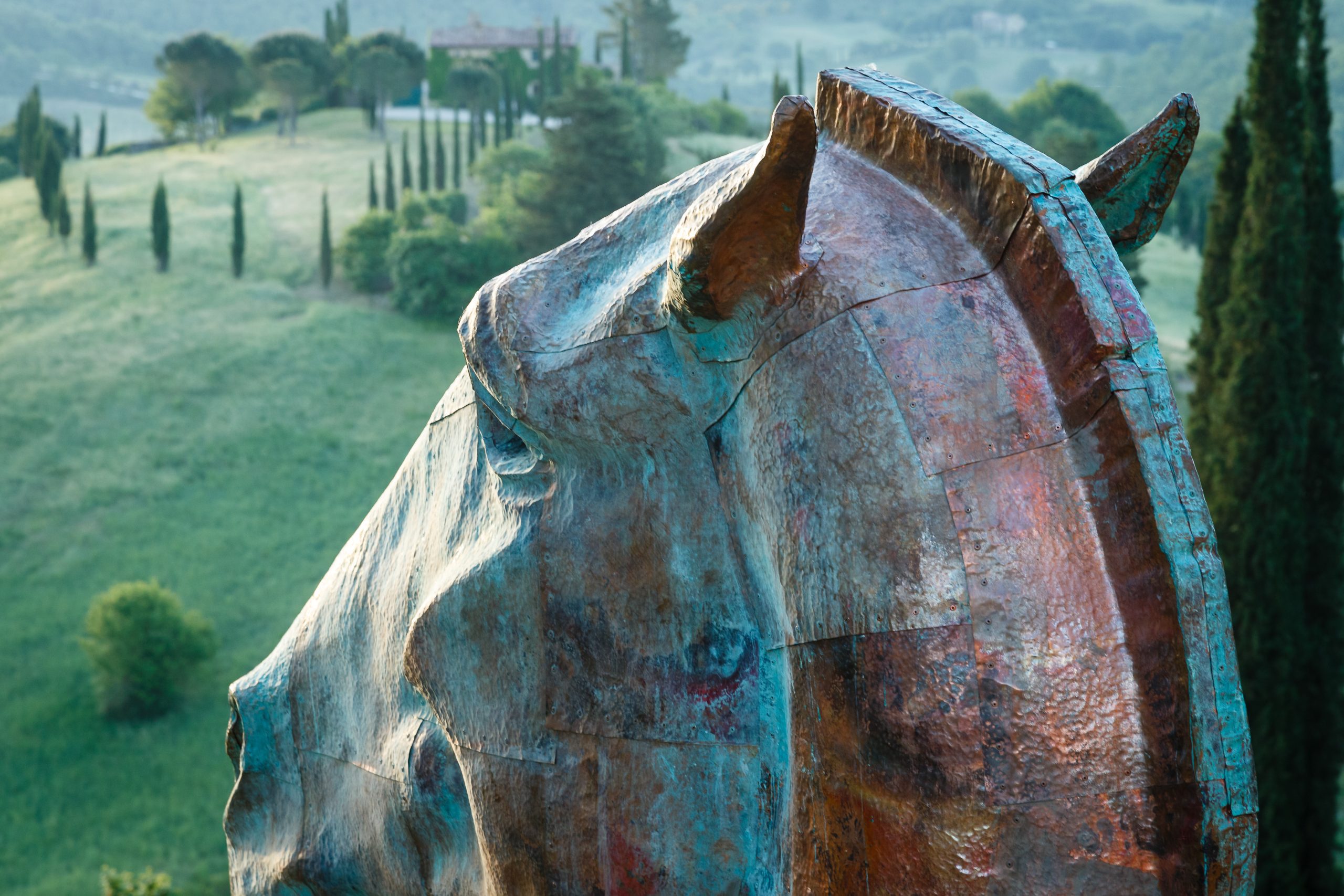
Copper
In a similar method to creating his lead sculptures, Nic hand hammers copper sheet over resin casts of his models, joining them together with handmade rivets. Occasionally he patinates the copper to give an aged, green effect.
Gold
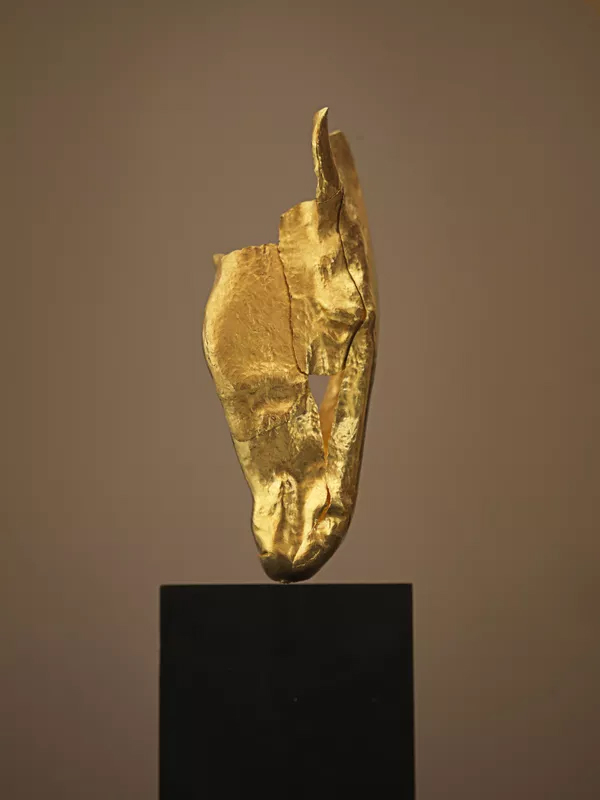
Nic uses 24 carat gold sheet in a fragmentary manner to allude to the fragile nature and grace of the horse. The polished surface of these sculptures contrasts with the aged verdigris finish on many of his bronzes.
Silver
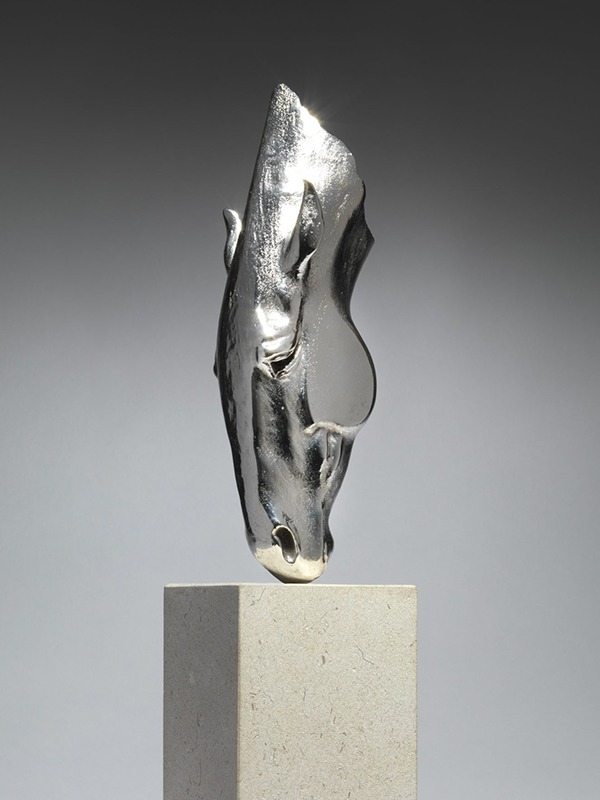
Nic has used sterling silver sheets for his work, particularly on renditions of his ‘Greek Head’ motif. The rivets used in joining together these sheets are suggestive of an armour-like finish. He has also made sculpture from hallmarked solid silver.
Drawings
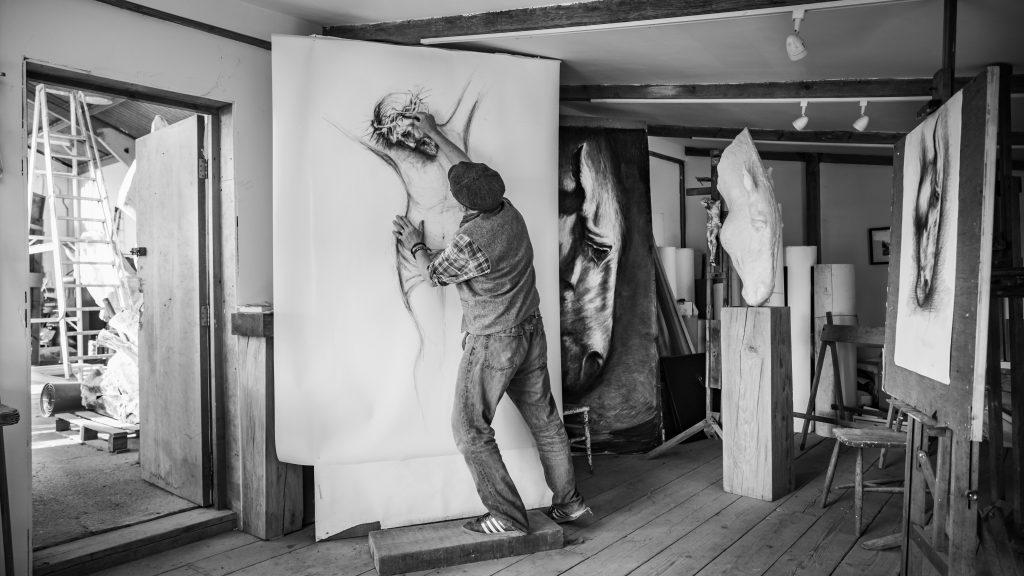
Historically, Nic has always used charcoal on paper, with his earlier works focusing on equine anatomy and the landscape at Wintershall, Surrey, where he has had his studio for over 30 years.
In recent years, Fiddian Green’s drawings have been heavily influenced by the Italian architecture of Rome and Venice, where he has had exhibitions in 2015, 2019 and 2022. These engage with the beauty of light, line, and expression amongst settings of a historically classical nature. His work has also engaged with religious iconography, via the depiction of church interiors and also Christ alone. A theme that has fascinated and had a great importance to Nic since the 1990s.